Building a business and accumulating wealth takes decades of persistence and difficult decisions. Protecting the result is now the task — and building a position in physical precious metals is not a matter of buying metal without a plan. The structure of a holding has to match the scale of the capital behind it.
Smaller holdings: flexibility first
Securing the equivalent of 100,000 złoty is a different exercise from placing a million or more; the second requires different logic, discretion and logistics. At smaller amounts, holdings are usually built on standard bullion coins — the one-ounce Krugerrand, the Vienna Philharmonic, the Canadian Maple Leaf.
Coins offer flexibility. If cash is needed, one or two can be sold without liquidating the whole holding. Several dozen ounces also fit discreetly into a well-chosen home safe.
Larger holdings: bars and logistics
Where hundreds of thousands or millions are involved, building the whole holding from one-ounce coins becomes impractical. Gold occupies relatively little space given its density, but at scale the sheer number of coins becomes a logistical question — and silver requires considerably more room.
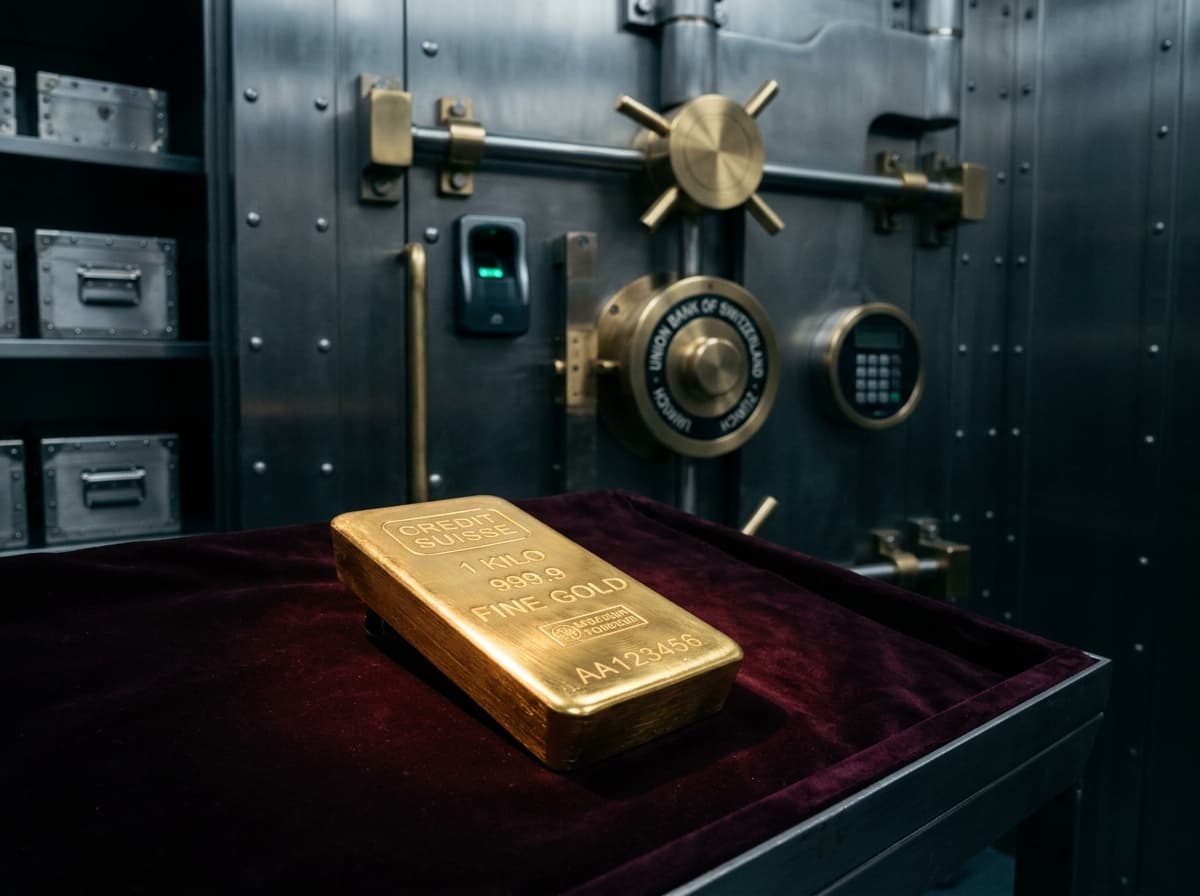
The principle is straightforward: the larger the capital, the more the core of the holding rests on large physical bars — 250 g, 500 g or 1 kg in gold, and correspondingly larger units in silver. That approach saves space and reduces the average cost of acquisition.
Certification and vaulting
Quality is the uncompromising part. Every bar should carry certification and the LBMA mark. That accreditation is a global mark of credibility and supports both authenticity and liquidity: metal carrying it is accepted by serious dealers from Zurich to Dubai and Singapore.
Physical security is the second question, and at this scale often the more important one. Keeping a substantial holding in a domestic safe becomes a disproportionate risk. Placing wealth of this size calls for institutional-standard arrangements that address theft, geopolitical disruption and continuity.
This is why independent professional vaults and free-trade zones are chosen, frequently in Switzerland — arrangements that keep metal outside the banking system while maintaining a high standard of confidentiality.
In summary
The architecture of a precious metals holding evolves with the wealth behind it. Smaller amounts favour coins for liquidity; substantial holdings favour certified LBMA bars for stability and lower storage cost. The point is not simply to buy gold, but to do it with a plan and with the logistics resolved.