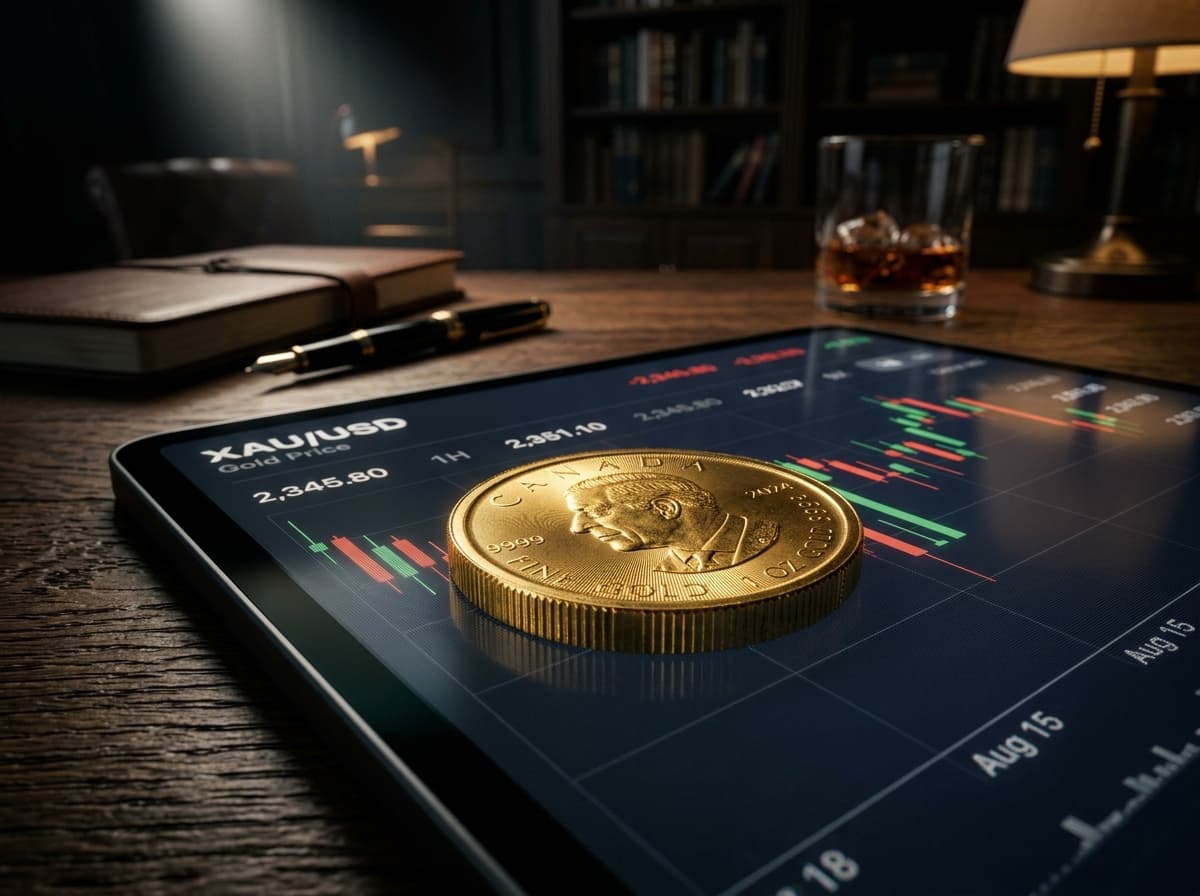
Owners approaching the physical metals market for the first time often carry one assumption from the screen: that the quoted price is the price at which metal can be bought and held. It is worth setting that assumption aside at the outset.
The exchange price — the spot price shown in the news — is a digital record. It is the price of futures contracts in which physical metal almost never changes hands. The market for metal that is actually held has its own logic.
What the mint premium covers
Paper gold can be created with a click. For real metal to become a recognisable bullion coin or a precisely cast bar, it has to travel a physical path, and that path has a cost.
The metal is mined, often on another continent. It goes to a refinery to be brought to the required fineness. It is struck by a mint — a process that is both technical and a craft — passes certification such as LBMA accreditation, and is delivered securely to a dealer or a vault.
Those production and logistics processes create a real cost known as the mint premium. Buying a coin means paying not only for the metal but for a finished, sealed, difficult-to-counterfeit product that is readily saleable worldwide.
Understanding the spread
Alongside the premium, the physical market has a spread: the difference between the price at which a dealer sells metal and the price at which the dealer will buy it back.
In short-horizon trading, where participants pursue fractions of a percent, the spread is treated as an obstacle. Physical gold and silver are held on a different horizon. They are not bought for a week to be sold at a profit a month later; they are the foundation of an intergenerational holding.
Over that horizon, premium and spread are not a loss. They are a one-off cost of moving the results of decades of work outside the banking system, beyond the reach of policy decisions, institutional failure and digital outages.
In summary
Buying physical gold and silver always involves a mint premium and a spread. They are best understood not as obstacles but as the natural cost of craft and logistics behind genuinely certified metal — and what they buy is direct control over one’s own capital.