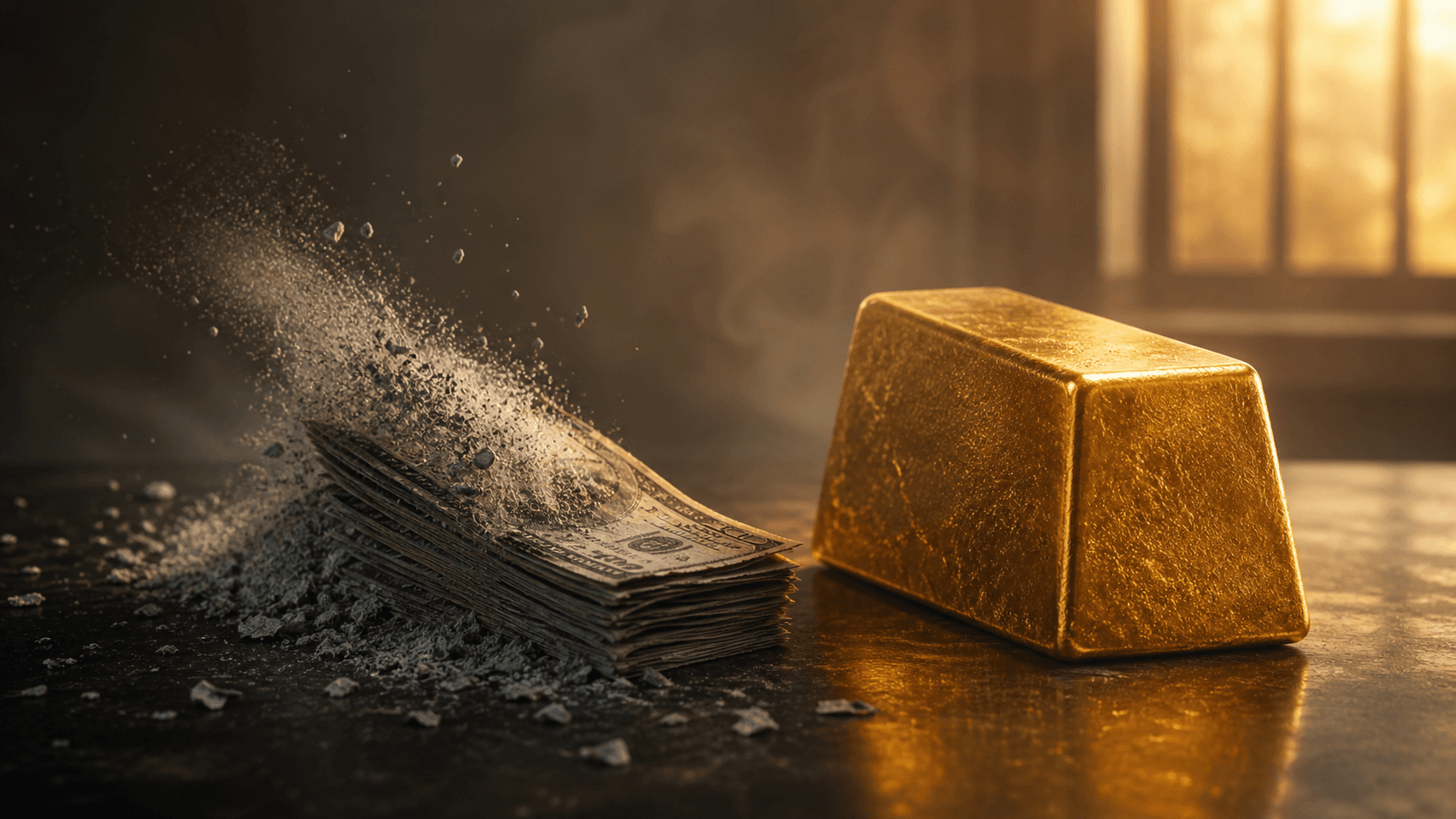
Money is earned, set aside and expected to secure a family’s future. Yet with each passing year the same balance buys less. Most people describe this as rising prices. In substance, the prices are the symptom: the money is losing value.
Inflation is a mechanism, not an accident
We are accustomed to treating inflation as a natural economic phenomenon, something like the weather. It is more deliberate than that. Inflation is the consequence of expanding the money supply. Currency created without backing produces a hidden tax: no official arrives to take part of a balance from an account — only the purchasing power of that balance is reduced. It works quietly, and it falls hardest on the people who saved.
Stepping outside the mechanism
Monetary policy cannot be changed by an individual, but capital can be moved out of its path. Historically, precious metals have been the most durable shield against inflation. An ounce of gold bought a well-made suit centuries ago and buys one today. Fiat currency tends, over long periods, towards its intrinsic value. Gold, being physically limited, holds the work that went into acquiring it.
In summary
Inflation erodes what a family has built. Converting part of one’s savings into physical metal places a durable boundary between the results of a working life and the decisions of central banks — a choice for independence and for the real value of work.